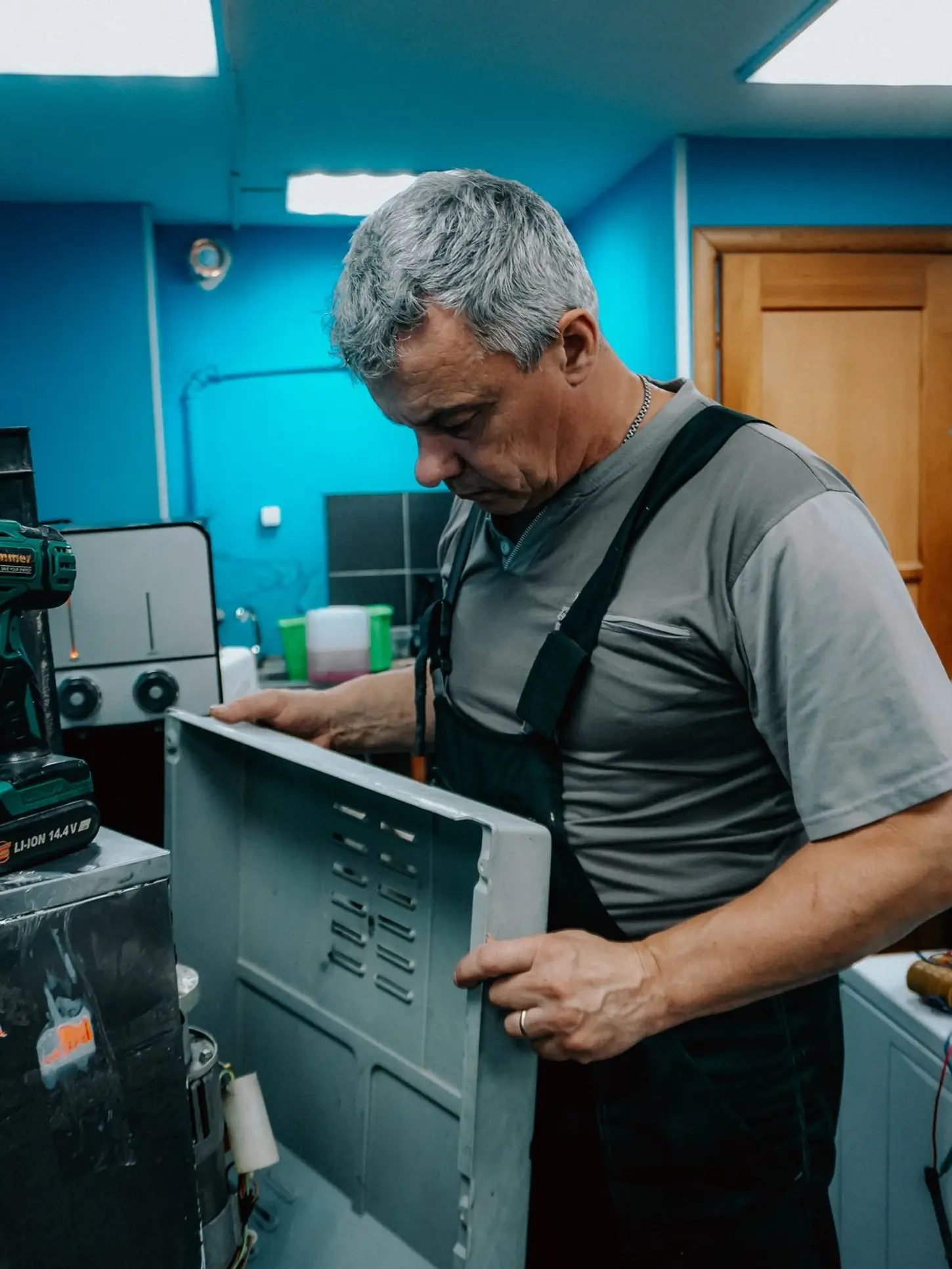
If your washer's spin cycle has picked up a grinding, rumbling, or metal-on-metal sound, a worn drum bearing is the most likely explanation. St Johns' split personality — longtime single-family homes on one side, smaller shared-laundry apartment buildings on the other — means we see this failure at very different mileage depending on which type of machine we're looking at, but the diagnostic step is the same either way: confirm the bearing before recommending anything.
The first job on any bearing call is ruling out everything else that produces a similar noise — a belt that's starting to fail, worn shocks, or a load that's thrown off balance can all sound like a bad bearing to an untrained ear. St Johns' housing genuinely spans two different worlds: early-1900s single-family homes on quieter residential streets, and smaller apartment buildings clustered nearer the Lombard corridor. A washer in the first setting has usually been in the same spot for years with light, occasional use; a shared unit in the second runs through far more cycles per week and simply wears out its bearing faster. We diagnose both the same way regardless.
The same diagnostic path, every visit.
Spinning the drum by hand to check for grinding, resistance, or looseness.
Checking for a bearing-related seal leak that accelerates bearing wear.
Checking for a drum that moves excessively — a sign of bearing or suspension failure.
Ruling out a bad shock, spring, or unbalanced load before confirming the bearing.
Bearing repair is generally worth doing on a machine that's otherwise running well. On an older washer nearing the end of its typical lifespan, we'll give you the honest cost comparison against replacement so you can decide — we won't push a repair that doesn't make financial sense.
Straight answers — no clicking around.
Call Portland Washer Repair to schedule a same-day or next-day drum bearing diagnostic visit.
(888) 555-0123