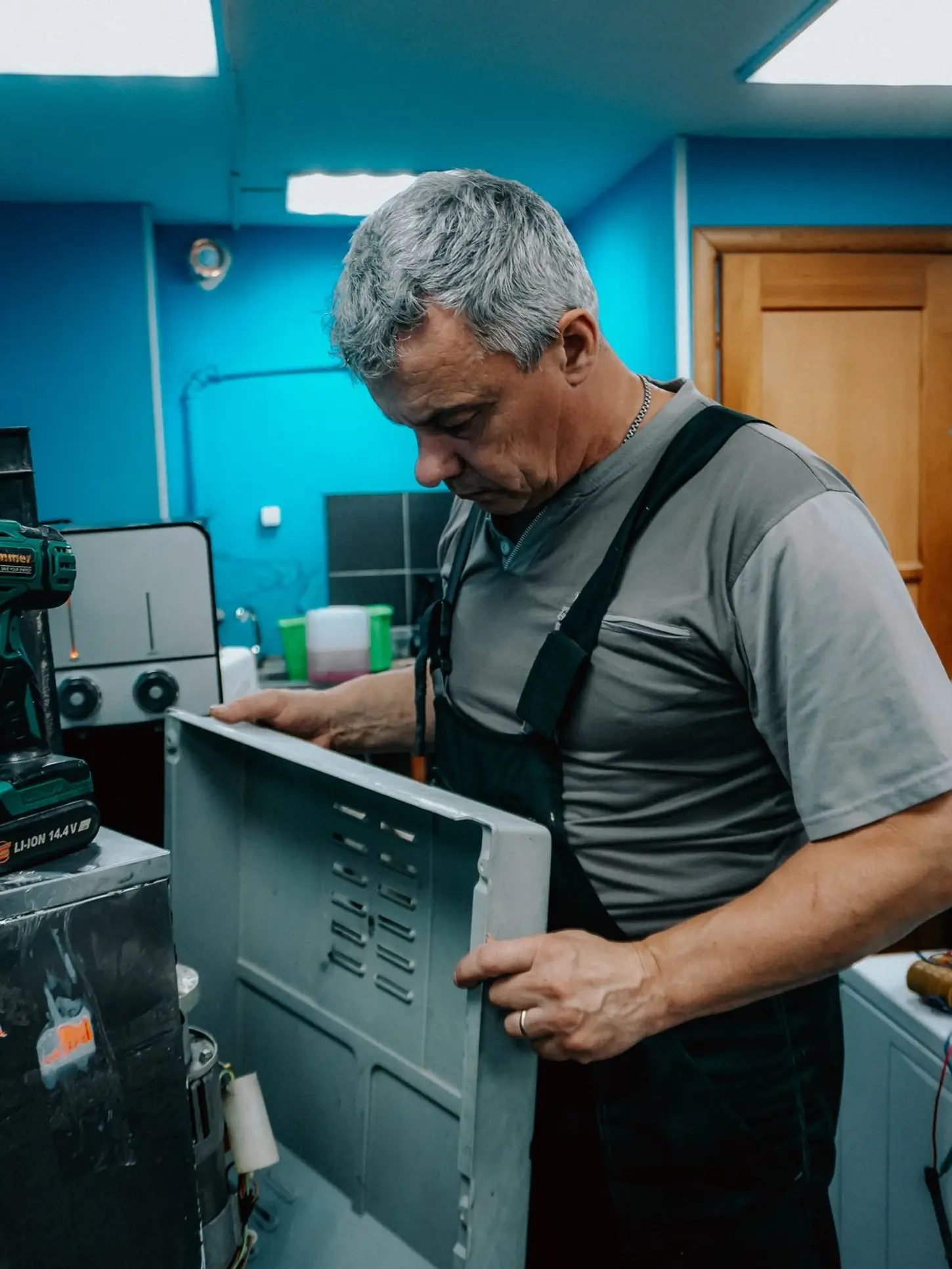
A torn or moldy door seal is one of the more common calls we get from Hawthorne's stacked laundry closets, where limited airflow around the machine makes it easier for moisture to linger in the gasket folds between washes.
Front-load washers installed in enclosed stacked closets — common throughout Hawthorne's converted apartment buildings — tend to get less ambient airflow than a machine sitting in an open laundry room, which means moisture in the door gasket has fewer opportunities to dry out between cycles. That combination of a small enclosed space and a folded rubber seal is exactly the environment where mold and mildew take hold fastest.
We inspect the gasket, confirm whether a leak is actually coming from the door seal versus a hose or valve, and check that the door latches and closes properly — a closet install can sometimes put slight pressure on the door hinge that a freestanding unit wouldn't experience.
Inspecting for tears, cracks, and mold in the seal's folds.
Confirming the door seal, not a hose or valve, is the cause.
Checking alignment, which closet installs can affect over time.
Noting closet ventilation that affects how fast the gasket dries.
Because a stacked closet traps humidity more than an open laundry room, leaving the door propped open between washes matters even more here — it's the simplest way to let the drum and gasket air out. Wiping down the gasket folds periodically also helps, especially in an enclosed space where the moisture has nowhere else to go. These are genuinely useful habits worth adopting regardless of which washer repair you need next.
Call Portland Washer Repair to schedule a same-day or next-day door seal diagnostic visit.
(888) 555-0123