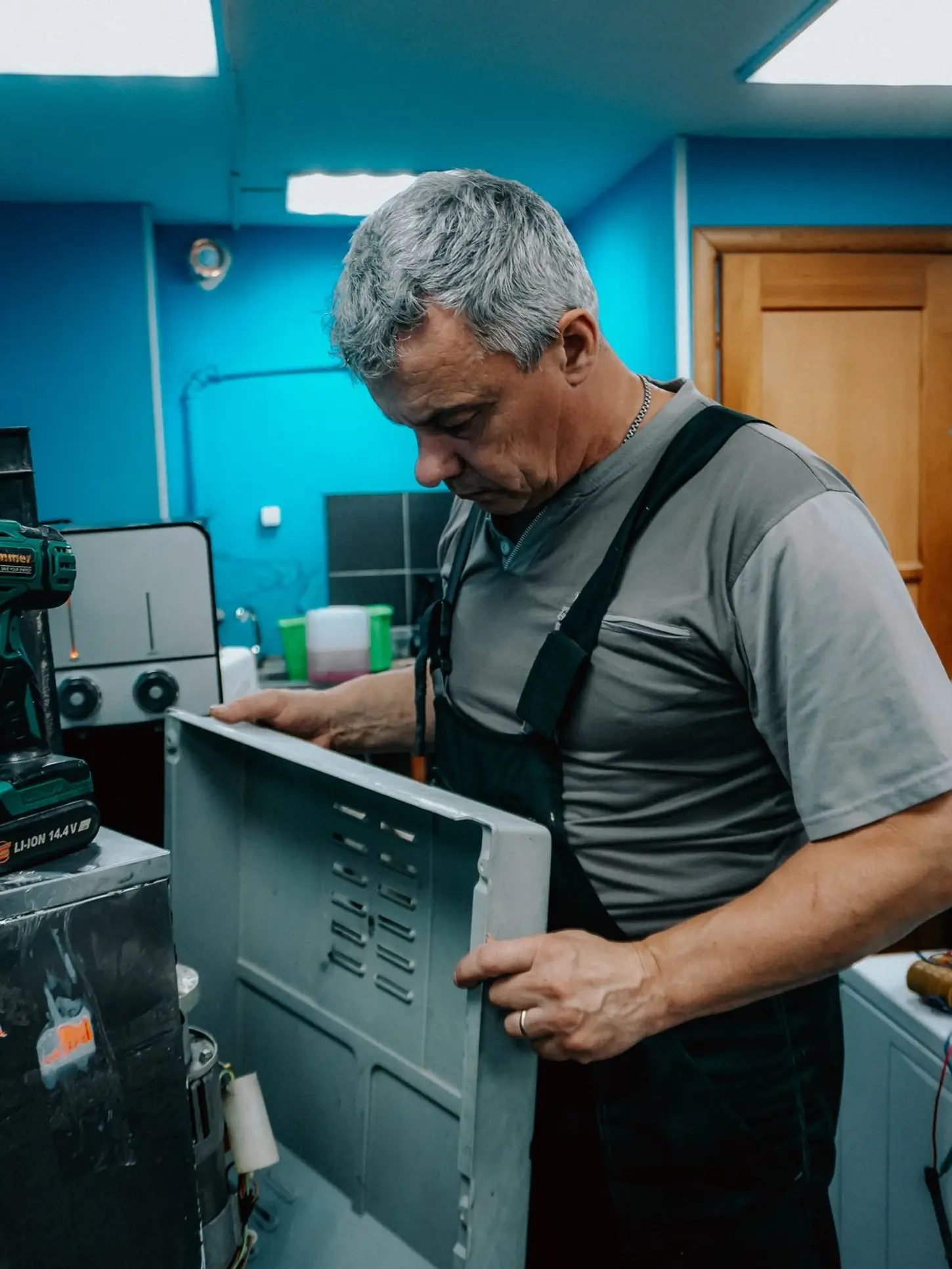
A torn or moldy door seal is a fairly contained repair, and in Mount Tabor's basement laundry rooms — which tend to run cooler and more humid than an above-grade utility closet — moisture in the gasket folds can be slower to dry out between washes.
Basements naturally run cooler and hold more ambient humidity than a room at street level, and that background moisture works against a front-load washer's door seal, which is already prone to trapping water in its folds after each cycle. In Mount Tabor's basement laundry rooms, that combination means mold and mildew can develop a bit faster than it would in a drier, better-ventilated upstairs closet.
We inspect the gasket's condition, confirm the leak source, and check the door latch and hinge before recommending a repair — the same diagnostic we'd run anywhere, just with basement humidity as an added factor worth flagging.
Inspecting for tears, cracks, and mold in the seal's folds.
Confirming the door seal, not a hose or valve, is the cause.
Checking that the door closes and latches properly.
Noting airflow that affects how quickly the gasket dries.
In a basement laundry room, leaving the washer door propped open between washes matters even more than usual, since the ambient humidity already gives mold a head start. A small dehumidifier or simply keeping the space ventilated can help beyond just the washer itself. Wiping down the gasket folds periodically is still the simplest habit — genuinely useful regardless of what else is going on in the space.
Call Portland Washer Repair to schedule a same-day or next-day door seal diagnostic visit.
(888) 555-0123