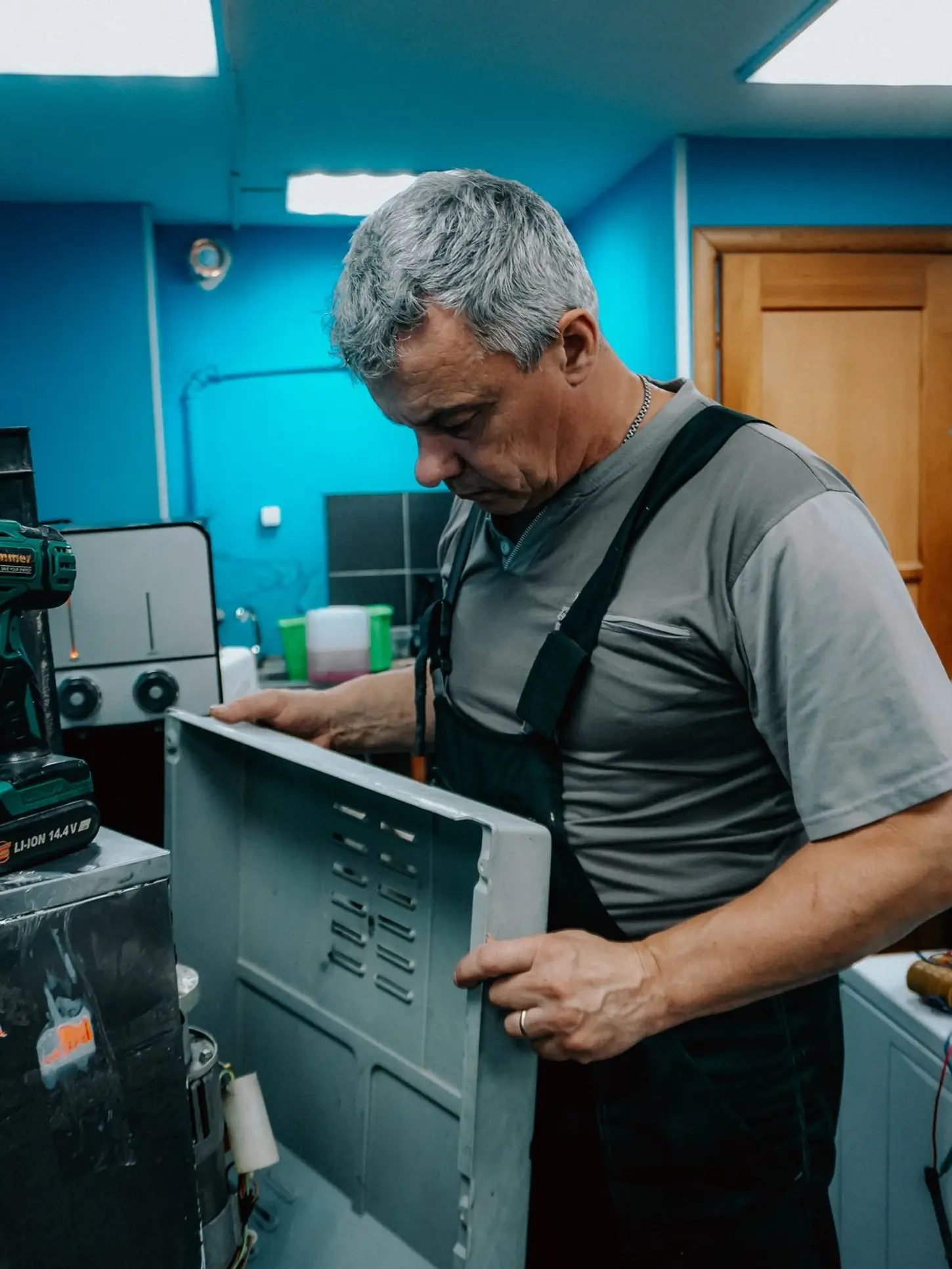
A washer that won't fill or won't drain usually traces to the inlet valve or drain pump — and in Sellwood's detached-garage installations, we also check the standalone supply and drain lines that were often run separately from the house's main plumbing.
In a detached Sellwood garage, the water supply and drain lines feeding the washer were frequently run as a standalone extension from the house's main plumbing rather than built in during original construction. That run is often longer, and sometimes uses older fittings, than what you'd find on an in-house laundry hookup — which makes it worth checking the full length of the supply line, not just the valve itself, when a fill or drain problem shows up.
Because a garage floor is usually bare concrete rather than a finished laundry room floor, a slow leak can go unnoticed longer — which is exactly why the sooner it's caught, the less risk to the slab, any stored items nearby, and the plumbing itself.
Testing the valve for slow fill, no fill, or connection leaks.
Checking the pump for clogs, wear, or failure to drain.
Checking the full extension line from the house to the garage.
Confirming exactly where water is coming from on the garage slab.
A supply or drain line extended out to a detached garage sometimes uses older fittings or a longer run than a builder-installed indoor hookup, and either factor can be the actual source of a leak rather than the valve or pump. We trace the full line rather than assuming the appliance itself is at fault.

Call Portland Washer Repair to schedule a same-day or next-day valve & pump diagnostic visit.
(888) 555-0123